

What to see in Vietri sul Mare: ceramics, sea and history
What to see in Vietri sul Mare? The village of the Amalfi Coast is famous mainly for its ceramics, but offers much more: churches decorated with majolica, views of the Gulf of Salerno, ancient monuments, hilly hamlets and the Marina.
However, the town is much more than a destination to buy majolica: the old town preserves churches and palaces, the Villa Comunale offers one of the most particular views on the Gulf of Salerno, while the hilly villages lead to historic villas, museums and small villages.
Visiting Vietri means alternating ceramics, history, views and sea, also discovering less known places than the most famous resorts in the Coast.
If you are planning a visit, in this guide you will find What to see in Vietri sul Mare, what not to miss in the center, what fractions to reach and how to organize the time available.
Discover the ceramic tradition of Vietri with a practical experience
Vietri is known even better by entering directly into the world of its ceramics. A workshop allows you to work clay, decorate a tile or a small pot and bring home your own creation.
What to see in Vietri sul Mare
Vietri sul Mare can be visited initially by concentrating on the old town, but the territory deserves to be explored even beyond the capital.
Among the main stages are:
- the Cathedral of San Giovanni Battista;
- the Archbishop of the Annunciation and the Rosary;
- the streets and ceramic decorations of the center;
- the Villa Comunale;
- Marina di Vietri and the Two Brothers;
- Villa Guariglia and the Museo Provinciale della Ceramica in Raito;
- the Museum of Contemporary Ceramics Punzi;
- the ancient Roman Baths;
- the villages of Raito, Albori, Molina, Dragonea and Benincasa.
The interesting feature is that many of these places tell the same story from different perspectives: ceramics, the sea and the relationship between Vietri and the surrounding area. The institutional portal of the ceramics is one of the main attractions of the Duomo, the Archconfraternita, Villa Guariglia, the towers, Marina and the hamlets.
The Cathedral of San Giovanni Battista
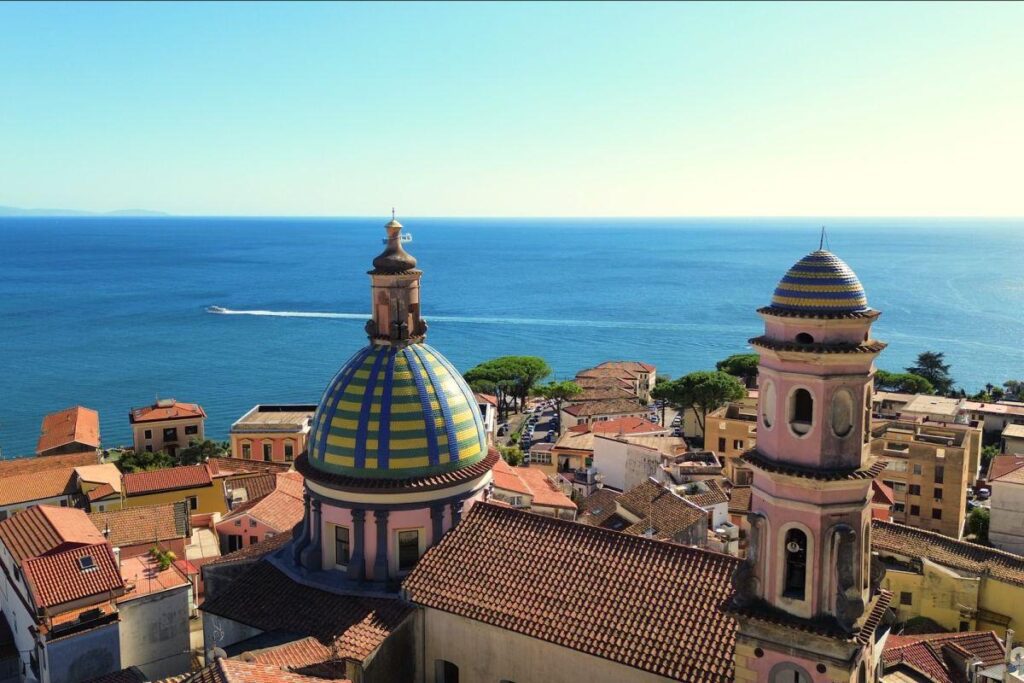
The Cathedral of San Giovanni Battista is the main reference point of the historical center of Vietri sul Mare.
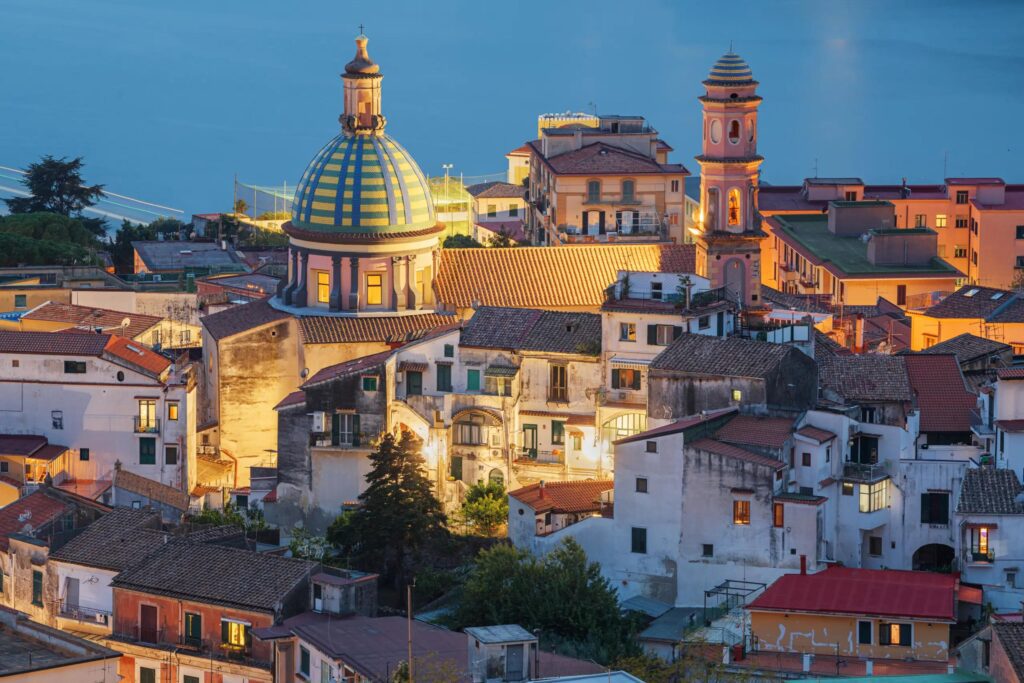
The church, of more ancient origin but rebuilt and transformed over the centuries, today presents a plant dating back to the 17th century and a late Renaissance Neapolitan style. Its most recognizable element is the great dome covered with green majolica, yellow and bluebecame one of the symbols of Vietri.
The dome is particularly beautiful if observed by the viewpoint of Piazza Amendola, from where you can also see the relationship between the old town and the sea.
Inside the church preserves artistic works of different eras, while the bell tower completes the characteristic profile of the building.
The Archbishop of the Annunciation and the Rosary
A short distance from the Cathedral is theArciconfraternita delAnnunziata e del Rosario, another building in which ceramic becomes an integral part of architecture.
The facade is decorated with painted ceramics and also the interior retain decorative elements of interest. Its origin dates back to the 17th century.
It is a stage that can be easily inserted in the walk through the historic center, without having to devote too much time to a specific move.
The old town of Vietri: alleyways, majolica and shops
One of the most pleasant things to do in Vietri is simply walking.
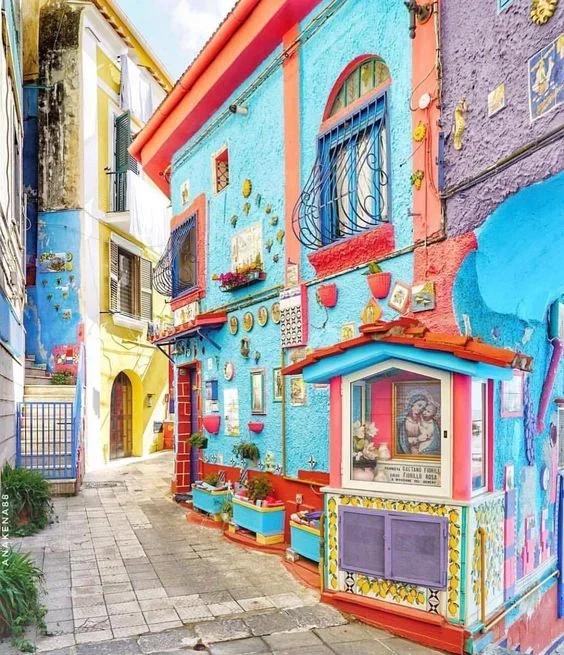
The old town is characterized by alleyways, arches, stairs and small squares in which the ceramic always appears.
Decorative panels, civic numbers, fountains, benches and architectural details turn the country into a sort of outdoor museum.
It is therefore not necessary to immediately enter a workshop: first it is advisable to look around and observe how the ceramic has become an integral part of the urban landscape.
The old town also preserves several ceramic works created by local artists and panels that tell scenes of everyday life and traditions of the country.
The ceramics of Vietri: what to see and where to discover it
Ceramic is the true thread of a visit to Vietri sul Mare.
Local production has a centuries-old tradition and the specificity of Vietnamese ceramics is also recognized by national law. The municipality also reports the inclusion of its traditional knowledge in the Inventory of the Campan Immaterial Cultural Heritage in 2025.
Walking through Vietri you can meet:
- decorative majolica;
- plates and pots;
- wall panels;
- tiles;
- everyday objects;
- contemporary art works.
The official portal of Vietri ceramics also maintains a list of the production and sales activities on the territory, precisely to protect the authenticity of the local production.
Is it worth buying a ceramic in Vietri?
Yes, especially if you want to bring home an object really linked to the destination.
The advice is to compare more workshops, observe the processing and ask for information on the origin of the piece.
You do not need to buy a big object: even a small tile, a plate or a decorative element can be a significant memory of the trip.
Want to try making a Vietnamese ceramic?
You can participate in a practical workshop and learn some traditional techniques directly with a local artisan.
Villa Comunale di Vietri sul Mare
The Villa Comunale is one of the most scenic places in Vietri.
Here the ceramic tradition directly meets the landscape: walls, paths, parapets and decorations are characterized by mosaics and colorful majolica, while from the terraces opens the panorama on the sea.
The Villa Comunale is particularly interesting because it is not simply a panoramic garden: it represents one of the most obvious examples of how the Vietnamese ceramic was used to build the visual identity of the country.
Inside is also the Viale dei Poeti, characterized by ceramic tiles decorated by Vietnamese masters and dedicated to poetry. The Superintendency reports nine ceramic tiles in the route.
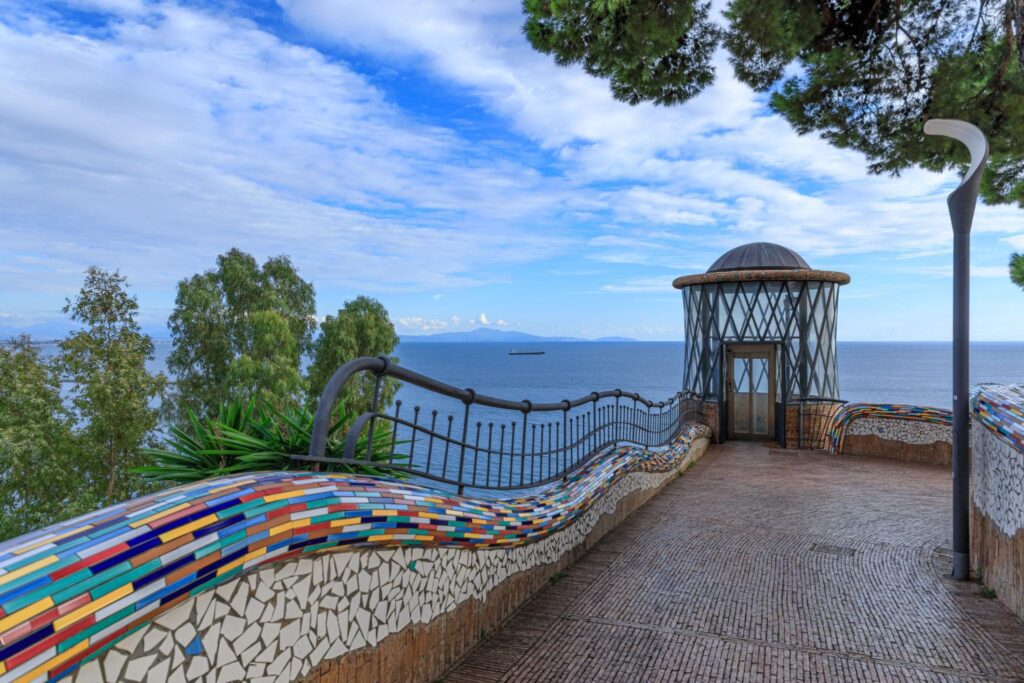
The Villa Comunale is also one of the best places to stop during the visit and photograph the coastal landscape.
Raito, Villa Guariglia and the Provincial Museum of Ceramics
To deepen the history of Vietnamese ceramics you have to climb up to Raito, one of the main hilly hamlets of Vietri.
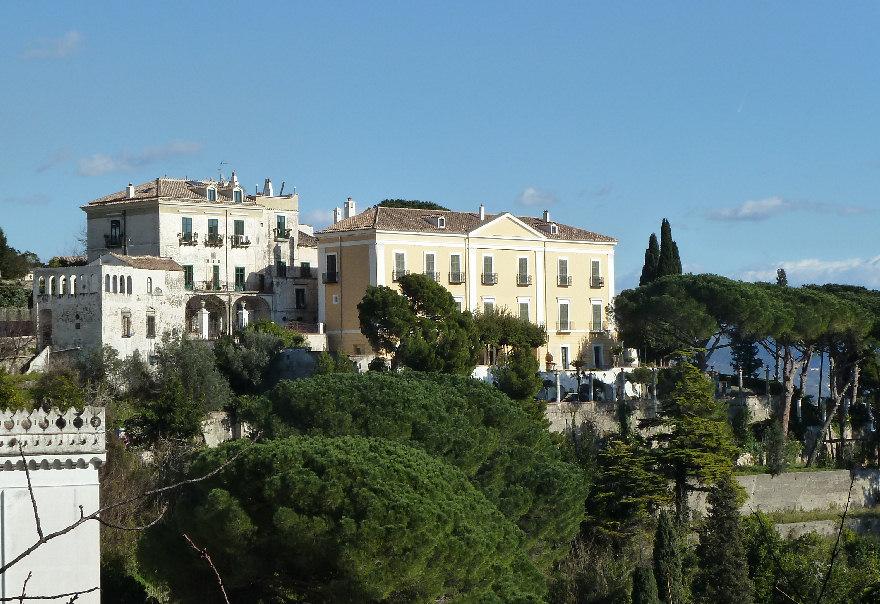
Here you are Villa Guariglia, an important historical residence surrounded by a terraced park overlooking the Gulf of Salerno.
The villa houses the Provincial Museum of Ceramics, active since 1981, with a collection dedicated to the ceramic production of the territory. The museum preserves works by various artists and periods of Vietnamese history, including Richard Dölker, Irene Kowaliska, Guido Gambone and numerous local ceramists.
The terraced park and the panoramic position make Raito interesting for those who are not particularly fond of ceramics.
The Museum of Contemporary Ceramics
The Museum of Contemporary Ceramics Punzi, housed in the historic Palazzo Punzi along Corso Umberto I, was officially inaugurated 4 December 2025.
The museum was created with the aim of bringing together the Vietnamese ceramic tradition with contemporary production.
The permanent collection includes works related to the international award "Viaggio through Ceramica", while other rooms are dedicated to temporary exhibitions. The route includes over sixty works and allows to follow the evolution of Vietnamese ceramics from traditional forms to contemporary languages.
For those who visit Vietri today it is therefore interesting to join the visit to the Museo Provinciale della Ceramica with this new space dedicated to contemporary production.
Marina di Vietri and the Two Brothers
After the historic center you can descend towards Marina di Vietri, the part of the territory directly overlooking the sea.
La Marina offers a long beach, promenade and characteristic Two Brothers, two rocks become one of the symbols of the Vietnamese landscape.
It is a completely different environment than the old town: here the protagonist is the sea.
The Marina is also the point from which to start to deepen the seaside part of the destination.
Read our guide:
🔗 Beaches of Vietri sul Mare: where to go, how to get there and local tips ➡️
The ancient Roman Baths of Vietri sul Mare
Among the less-known attractions of Vietri are the remains of Ancient Roman Baths in the area of Bagnara, Marina di Vietri.
The complex was identified in 1991 and includes several environments that can be traced back to a Roman thermal structure.
The presence of these structures bears witness to the importance that the territory had already in ancient times and adds a completely different element to the visit of Vietri.
The local tradition also links the area to the subsequent ceramic activity, creating an interesting historical thread between the ancient structures and one of the productions that still characterize the country.

The villages of Vietri sul Mare to see
One of the differences to the most famous resorts of the Coast is that Vietri has a very articulated territory.
Its fractions allow you to see a quieter and hilly face of the destination.
Raito
Raito is probably the most interesting fraction for those who want to combine panorama, history and ceramics.
Here you will find Villa Guariglia, the Museo Provinciale della Ceramica and panoramic terraces on the Gulf of Salerno.
Albori
Albori is a small hilly village characterized by alleyways, arches and views.
The village is linked to the church of Santa Margherita di Antiochia and preserves a very different character from the center of Vietri.
Molina
Molina is linked to the history of water and the ancient mills.
The territory also preserves Bridge of Molina, dating back to the 16th century, and other testimonies of local history.
Dragonea
Dragonea is located in the hilly part of the territory and is especially interesting for those who want to know the less coastal area of Vietri.
Beninhouse
Benincasa also allows you to walk away from the center and discover the hilly landscape, between houses, staircases, vegetation and terraces.
How long does it take to visit Vietri sul Mare?
The necessary time depends on how much you want to deepen the territory.
Vietri sul Mare in half day
You can focus on:
- historical center;
- Cathedral;
- ceramics;
- Arciconfraternita
- Villa Comunale.
Vieters on the Sea in one day
Adding:
- Marina di Vietri;
- Villa Guariglia;
- Provincial Museum of Ceramics;
- Museo della Ceramica Contemporanea Punzi.
Vietri sul Mare in two days
You can also spend more time in fractions:
- Raito;
- Albori;
- Molina;
- Dragonea;
- Benincasa;
and also enter the visit to the beaches.
What to see in Vietri sul Mare with children?
Vietri can also be interesting for a family visit.
Ceramic is probably the easiest element to transform into an experience: colors, shapes and processes allow children to approach a concrete artisan tradition.
The Villa Comunale is suitable for a break during the visit, while Marina di Vietri allows to combine the country with a few hours to the sea.
For older children can be particularly interesting a ceramic workshop, verifying of course the requirements of the chosen experience.
When is the best time to visit Vietri sul Mare?
Vietri can be visited throughout the year.
Spring and early autumn are particularly pleasant to walk in the historic centre, visit the hamlets and dedicate yourself to cultural attractions.
Summer is the best time if you want to combine your visit with Marina and the beaches.
In times of greater affluence it is best to arrive early, especially if you want to visit the center calmly and have more time to explore the fractions.
Where to park in Vietri sul Mare?
If you arrive by car, it is better to arrange parking before the visit.
Vietri is crossed by the SS163 and in times of greater affluence traffic can make it less easy to move and find place near the most central areas.
For detailed information about parking spaces, please refer to the specific guide:
Where to sleep in Vietri sul Mare?
Vietri can be a good base to explore the eastern part of the Amalfi Coast and the territory of Salerno.
Sleeping here allows you to have both the old town and Marina, as well as the possibility to easily reach the hills.
Read our guide:
Looking for accommodation in Vietri sul Mare?
What is the most famous thing about Vietri sul Mare?
Ceramic is the most identifiable element of Vietri sul Mare. Tradition is visible in the alleys, in the decorations of the buildings, in the shops, in the museums and in the same Villa Comunale.
What to see in Vietri sul Mare in one day?
On one day you can visit the historic centre, the Cathedral of San Giovanni Battista, the Archconfraternita, the Villa Comunale, Marina and at least one of the ceramic museums.
Is it worth visiting Vietri sul Mare?
Vietri offers a different experience than the most famous resorts of the Coast: the ceramic is integrated in the urban landscape and the territory also includes historical villas, museums, sea and hilly hamlets.
Where to see Vietri ceramics?
You can see the ceramics directly in the streets of the centre, at the Villa Comunale, at the Museo Provinciale della Ceramica di Villa Guariglia and at the Museo della Ceramica Contemporanea Punzi.
What are the fractions of Vietri sul Mare?
Among the main villages are Raito, Albori, Molina, Dragonea and Benincasa, as well as Marina di Vietri.
Where to see the most beautiful view of Vietri?
The Villa Comunale offers a very particular view of the sea, while Raito allows to observe Vietri and the Gulf of Salerno from a hilly position.
Can you make a ceramic workshop in Vietri?
Yes. GetYourGuide currently offers a practical workshop of about three hours in which you can work and decorate ceramics with a local artisan.
What to see after Vietri sul Mare
Vietri is the eastern starting point of our Coast, so it can be easily inserted in a wider itinerary.
After visiting Vietri you can continue towards:
- Cetara
- Pigs
- Minors
- Ravello
- Amalfi,
- Atrani
To better organize your stay, you can explore the other cluster guides:
🔗 Where to Stay in Vietri sul Mare ➡️
🔗 Where to eat in Vietri sul Mare ➡️
🔗 Beaches of Vietri sul Mare ➡️
What to see in Vietri sul Mare: a country to discover without haste
Vietri sul Mare is much more than its fame as a city of ceramics.
The ceramic remains of course the main theme of the visit, but around it you will find a historic center full of details, the Cathedral of San Giovanni Battista, the Villa Comunale, Marina, the ancient Roman Baths, Villa Guariglia and the hilly hamlets.
It is precisely this combination to make Vietri interesting: you can come for the majolica and end up discovering an entire territory.
Vivi Vietri through its ceramics
Discover the Vietnamese tradition directly through a practical experience and create your own memory of the Coast.

