

What to see in Positano: full guide between center, sea and views
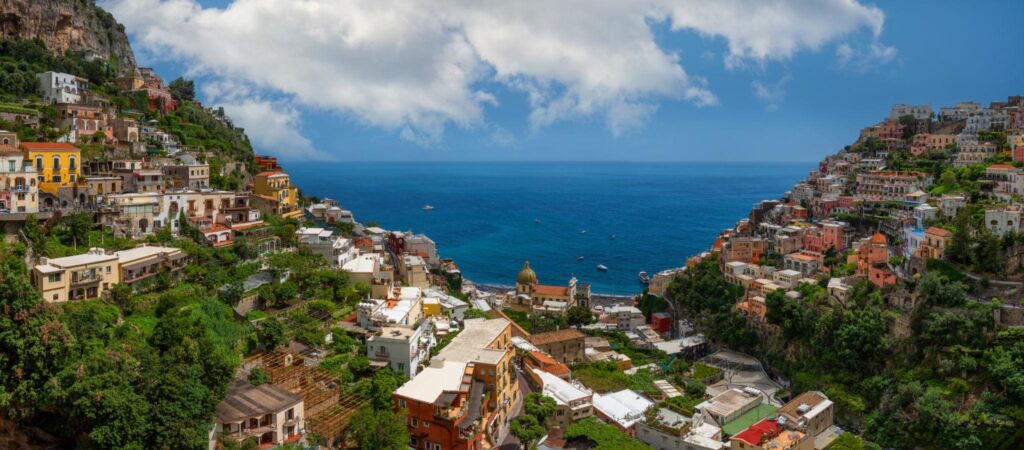
What to see in Positano? The answer is not found in a single attraction, because Positano is above all a country to live slowly, between alleys, stairways, panoramic terraces and views of the sea.
The center develops from the top to the Beach, with colorful houses built on the mountain, small pedestrian streets and numerous steps. The centre of the visit is the Church of Santa Maria Assunta, recognizable by the large majolica dome, while not far away is the Roman Archaeological Museum, built around the remains of an ancient Roman villa.
But Positano doesn't end here.
You can reach the beach Supplies, climb to the quietest areas of the country, discover Montepertuso and Nocelle, or look at Positano from the sea.
This guide accompanies you to discover the most interesting things to see and helps you organize your visit without wasting time.
Want to see Positano from the most spectacular perspective?
From the sea you can observe the houses built on the mountain, the beaches and coves of the coast.
The most beautiful things to see in Positano
If you have little time, focus on these areas:
Historic centre and Via dei Mulini
Church of Santa Maria Assunta
Roman Archaeological Museum
Beach
Supplies
The steps and the views of the village
Montepertuso and Nocelle
Coastal towers and coast view from the sea
Positano is very vertical: a short distance on the map can mean several stairs.
For this reason it is advisable to organize the visit by following a natural path, instead of trying to reach each point separately.
The historic centre of Positano
The old town is the best starting point.
The best known part develops between Piazza dei Mulini, Via dei Mulini and the Church of Santa Maria Assunta, then descend to the Great Beach.
Here Positano shows its most famous image: pastel-coloured houses, balconies full of flowers, shops, ceramics, fabrics and staircases that open continuously towards the sea.
You do not need to follow the main road.
One of the most pleasant things to do is get lost in the side streets, where the village becomes quieter and you can find small panoramic points away from the busiest route.
Church of Santa Maria Assunta
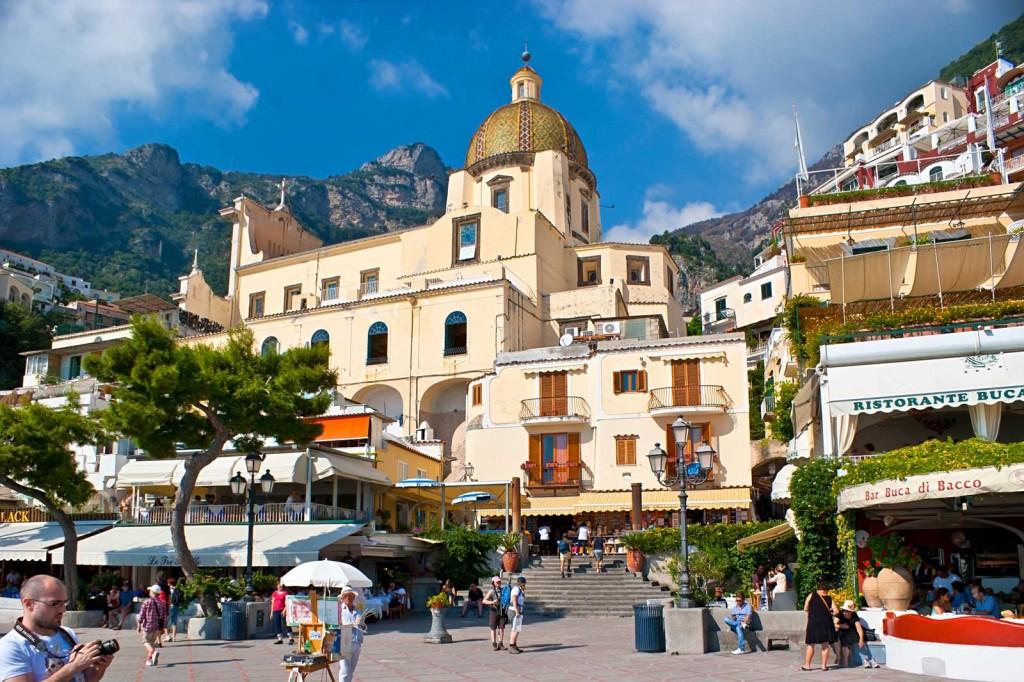
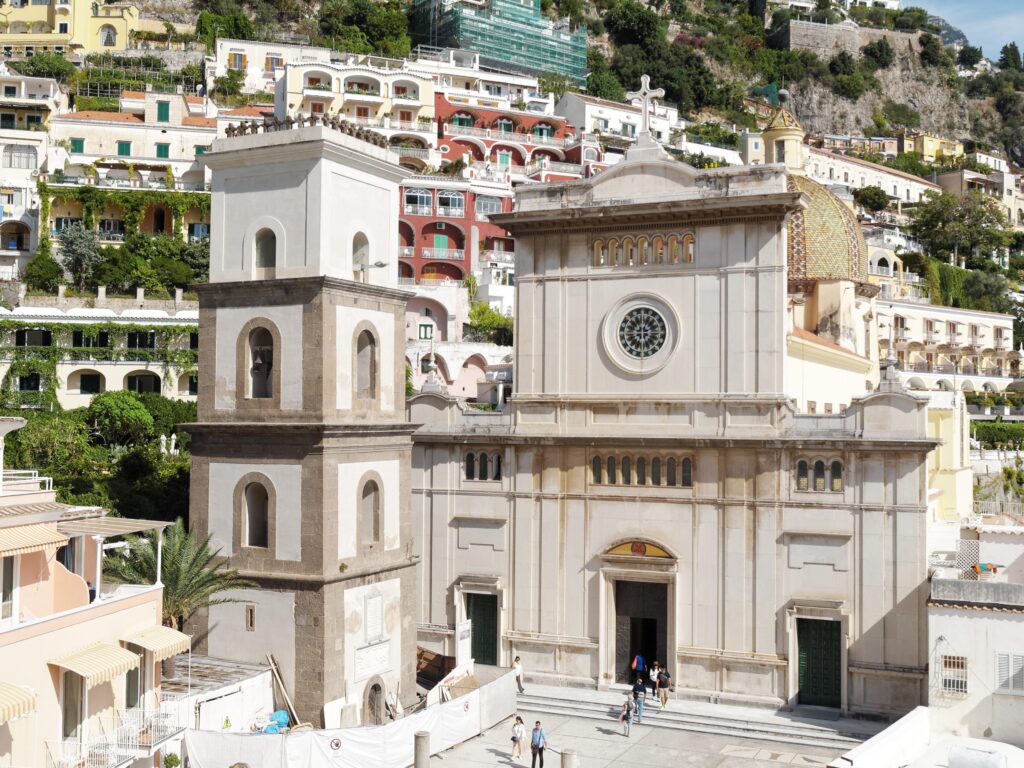
The Church of Santa Maria Assunta is one of the symbols of Positano.
Its large majolica dome, decorated with green, yellow and blue motifs, is immediately recognizable even from afar.
The church is located next to the Spiaggia Grande and is one of the main points of the visit.
Inside is the famous Madonna Black, a Byzantine icon linked to the religious tradition of Positano.
The location of the church is also one of the reasons why the old town is so characteristic: from the square you can see the building, the sea and the houses that rise along the mountain.
Do you want to discover the ancient history of Positano?
The visit of the center can be completed with the Roman Archaeological Museum, one of the least known places in the country.
Roman Archaeological Museum of Positano
Below and next to the Church of Santa Maria Assunta is one of the most interesting archaeological treasures of the Coast.
The Roman Archaeological Museum preserves the remains of a Roman villa built in the coastal area of Positano.
The excavations brought to light decorated environments and testimonies of the Roman presence in the ancient settlement.
The visit is particularly interesting because it allows you to see a completely different side of Positano.
Above there are the sea, ceramics and colorful houses.
Under the church you can find a part of the Roman history of the city.
Visit times and methods can change during the year, so it is always advisable to check the updated information before organizing the visit.
Big beach: the heart of Positano
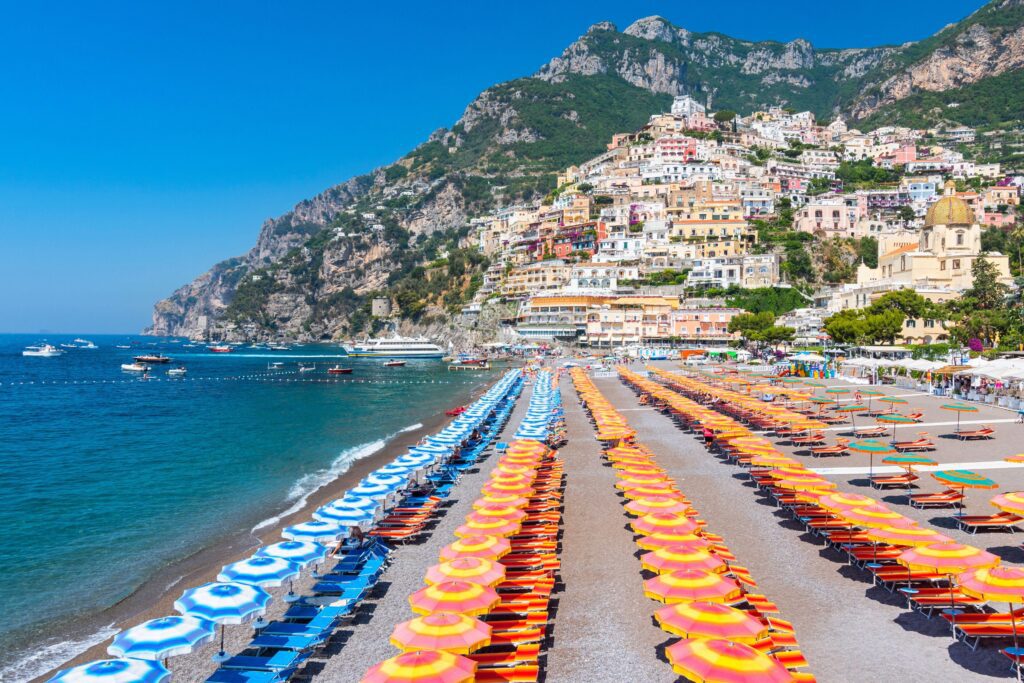
The Beach, also known as Marina Grande, is the main beach of Positano.
It is probably the most recognizable point in the country: from here you can see the mountain completely covered by the houses and the dome of the Church of Santa Maria Assunta.
The beach is also the starting point of numerous activities on the sea and boat connections to other resorts of the Coast and Capri during the season in which they are active.
However, it is not necessary to stop all day.
Even if you have only a few hours, it is worth to go down to the beach, look at Positano from the sea level and then slowly go back to the center.
Supplied: the quietest part of the coast
If Spiaggia Grande represents the tourist heart of Positano, Supplies offers a generally quieter atmosphere.
From the Big Beach you can reach it by following the pedestrian path along the coast, also known as Via degli Innamorati.
The walk allows you to see the village from a different perspective and to pass next to some of the ancient coastal towers.
Fornillo is also one of the beaches to consider if you want to spend a few hours at the sea away from the most central stretch.
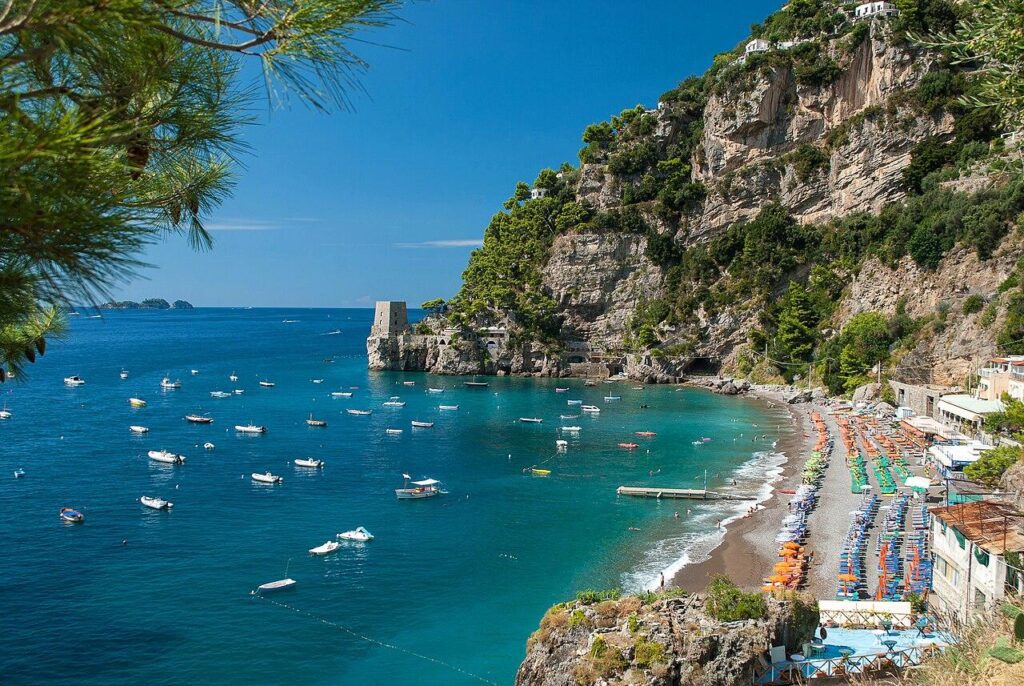
Coastal towers of Positano
Looking at the coast from the sea or walking towards Fornillo you can see some of the ancient sighting towers.
The towers were part of the defensive system built along the Coast to signal the danger from the sea.
In Positano they are particularly tied to the coastal landscape Torre Trasita, Torre di Sponda and Torre di Fornillo.
Today are not only historical testimonies.
They became part of the landscape that makes the coast of Positano recognizable.
The most beautiful steps and views of Positano
One of the most peculiar features of Positano are its stairs.
The village is not built on a flat surface: roads and stairways connect the upper part with the sea.
For this reason a walk without a precise destination can be one of the best ways to visit it.
Take comfortable shoes with you and stop when you find a panoramic spot.
Often it is not necessary to reach a famous monument: the view of the houses that descend to the sea is already one of the main attractions of Positano.
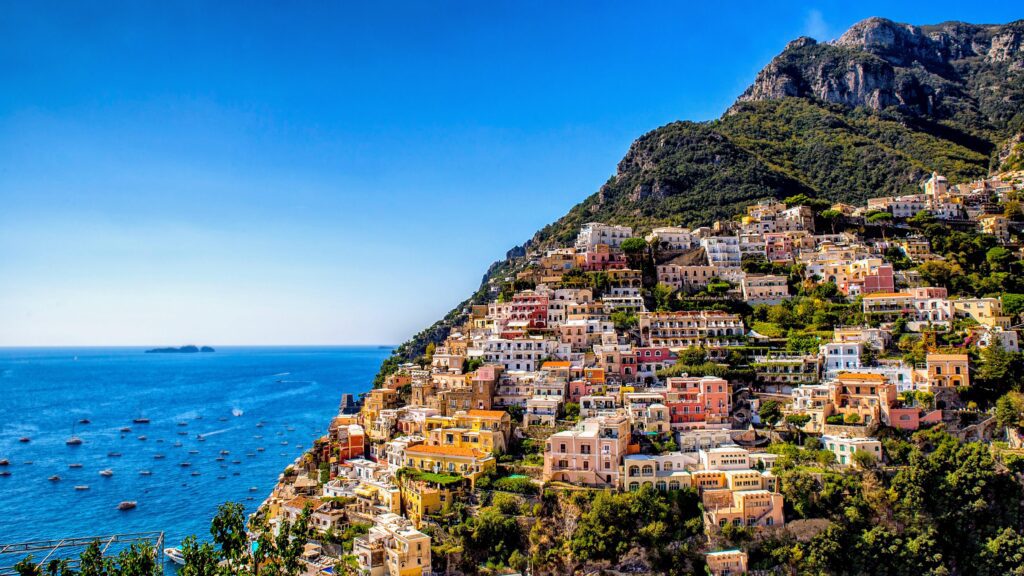
The upper part of Positano
Most visitors stay in the lower part, between Piazza dei Mulini and Spiaggia Grande.
But Positano continues much higher.
Climbing you can reach less crowded neighborhoods and areas, where the pace changes completely.
The New Church is one of the references of the upper part of the country.
From here you can also continue towards fractions and routes that lead to Montepertuso and Nocelle.
If you have at least one full day, it is worth devoting part of the time to this area.
Montepertuso and the great natural arch
Montepertuso is a hamlet of Positano located on the mountains above the village.
The name comes from the large natural hole that characterizes the rocky wall, the so-called Perfume.
The area is interesting especially for those who want to get away from the crowd of the center and combine Positano with a more connected experience to the mountain landscape.
From Montepertuso there are also routes and connections to the Nocelle area.
Nocelle and the Path of the Gods
Nocelle is a small hamlet of Positano perched on the slopes of the Lattari Mountains.
It is known above all because it represents one of the arrival points of Path of the Gods.
The most famous route connects Bomerano, to Agerola, with Nocelle and offers spectacular views of the Coast, the sea and Capri.
However, it is important not to consider it a simple tourist walk.
The Path of Gods is a mountain route and requires adequate shoes, water and a preparation proportional to the chosen path.
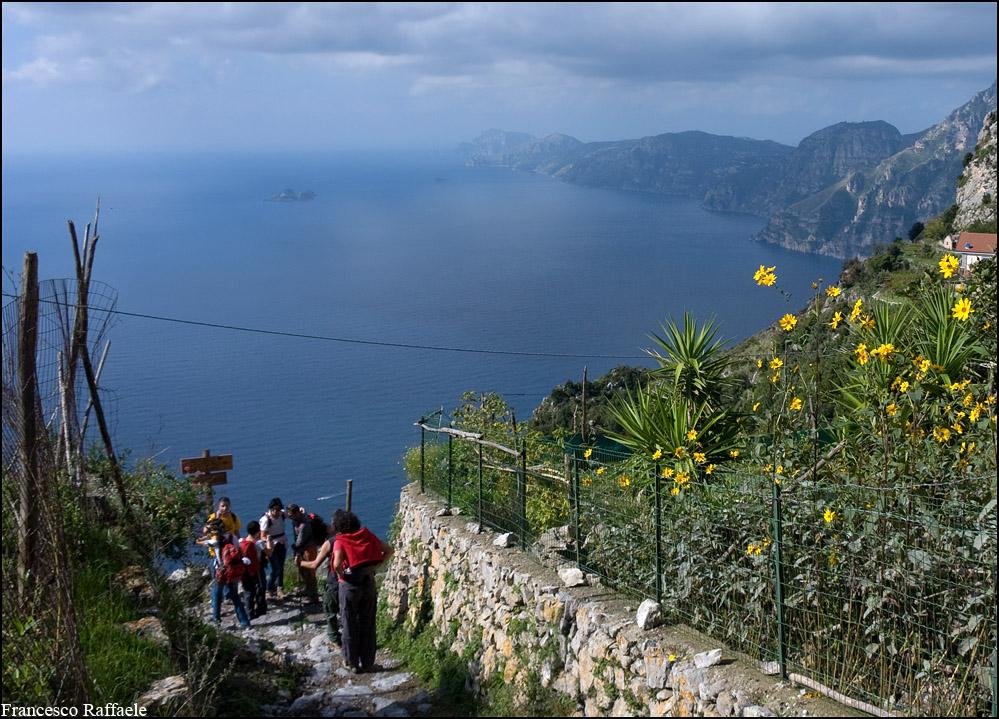
Do you want to walk the Path of the Gods with a guide?
If you don’t know the route or prefer not to organize transfers and trekking, you can evaluate a guided tour.
Positano sea view
One of the most beautiful experiences to add to the visit is to see Positano from the sea.
From the boat the perspective changes completely.
The houses seem to climb the mountain and you can recognize the dome of Santa Maria Assunta, the beaches and coastal towers.
It is also the best way to understand the vertical conformation of the country.
If you’ve already planned a boat trip, you don’t need to add an activity just for this reason.
If you want to live Positano also from the sea, a mini cruise or a boat tour can become one of the most beautiful moments of the stay.
Positano beaches and coves
Along the coast of Positano there are other small beaches and coves.
Among the known ones are Laurito and Arienzo, while some areas of the coast are more easily accessible from the sea than on foot.
In order not to weigh this guide, we have prepared a page dedicated to the beaches, where you can find more specific information about accesses, features and links.
Read our guide:
🔗 Beaches of Positano – where to go and how to get ➡️
When to visit Positano
The best period depends on the type of experience you are looking for.
Spring is ideal for walking and visiting the country with generally more pleasant temperatures.
Summer is the most suitable period if you want to live the sea, but it is also what Positano can be very crowded.
September can be one of the most interesting choices to combine sea, walks and temperatures more manageable.
In autumn the village changes pace and becomes interesting especially for those seeking tranquility and trekking.
Practical tips for visiting Positano
Before leaving, keep in mind some things.
Comfortable shoes
The stairs are an integral part of the country.
Also for a simple visit to the center it is better to avoid uncomfortable shoes.
Water
During the summer, especially if you climb to Nocelle or Montepertuso, it always brings enough water.
Little baggage
If you need to move on foot, a heavy suitcase can become very uncomfortable.
Book experiences in advance
Boat tours, excursions and some visits can run out of places during periods of greatest attendance.
Where to stay in Positano
If you want to stop more than one day, the choice of accommodation is important.
The central area is comfortable to live in the country, while the highest areas can offer larger views.
If you want to deepen prices, areas and types of structures:
Read our guide:
How to get to Positano
Positano does not have a train station and during the high season the coastal road can be very busy.
You can get there by bus, private transfers, by car or by sea, depending on the period and the starting point.
Not to overload this guide with information on the links:
Read our guide:
How to get to Positano
Where to park in Positano
If you arrive by car, the parking must be arranged first.
The space is limited and the conformation of the country makes it little practical to arrive without having an idea of where to leave the car.
For more detailed information read our guide:
Where to park in Positano
What is the most beautiful thing to see in Positano?
There is no one attraction. The old town, the Church of Santa Maria Assunta, the Spiaggia Grande and the views are the main elements of the visit.
How long does it take to visit Positano?
For a first visit it is advisable at least half a day. With a full day you can add Fornillo and visit the country more calmly.
What to see in Positano in a day?
You can visit the historic center, Santa Maria Assunta, the Roman Archaeological Museum, Spiaggia Grande and Fornillo. If you prefer trekking, you can spend the day in Nocelle and the Path of the Gods.
Is it worth visiting Fornillo?
Yes, especially if you want to see a quieter part of the coast and take a panoramic walk from the Great Beach.
Can you visit Positano on foot?
Yes, the tourist center is mainly pedestrian, but it is necessary to consider numerous stairs and disparities.
Is Positano suitable for families?
Yes, but the many stairs can be challenging with strollers and very small children. It is important to choose itineraries and accommodation taking into account the difference in altitude.
Is it worth visiting the Path of the Gods from Positano?
Yes, if you love trekking and have a proper preparation. The route is a mountain experience and should not be faced as a simple urban walk.
What to see in Positano: conclusion
Positano is not a place to cross quickly with a camera in hand.
Its charm lies in the way the village develops between mountain and sea.
You can start from the top, go down through the steps to the Church of Santa Maria Assunta and the Spiaggia Grande, continue towards Fornillo or change completely perspective going up towards Montepertuso and Nocelle.
And if you have more time, you can add the sea, the coves and the Path of the Gods.
The best thing is to leave room for the walk.
In Positano the route is part of the destination.

